
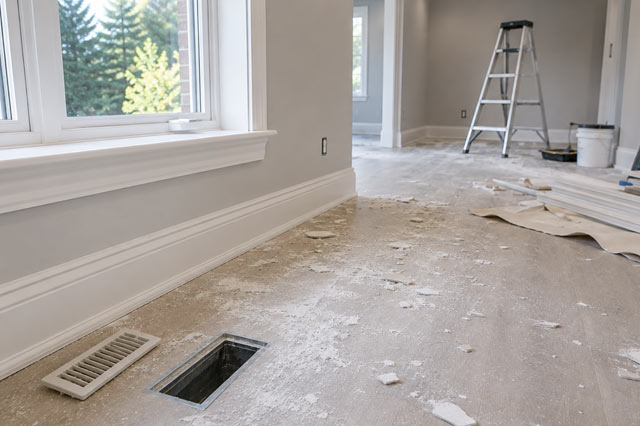
Finishing a renovation usually means one final round of cleaning: removing construction debris, vacuuming floors, wiping surfaces, and getting the rooms ready to use again. But there is one area homeowners can easily overlook — the HVAC ductwork.
Drywall sanding, demolition, drilling, cutting wood or tile, and other renovation work can release large amounts of fine dust into the air. If that dust reaches open registers or return vents, some of it may end up inside the duct system, where regular household cleaning cannot reach it.
That is why post renovation duct cleaning is worth considering after dust-heavy remodeling projects in Toronto and the GTA. It addresses the part of the cleanup that may remain hidden after the renovated rooms themselves already look clean.
How Renovation Dust Gets Into Your Ductwork
Renovation dust does not necessarily stay in the room where the work takes place. Fine particles can remain airborne and travel throughout the surrounding space.
Depending on the project, renovation debris may include:
- fine drywall and joint-compound dust;
- sawdust and wood or MDF particles;
- dust produced by drilling and demolition;
- insulation fibres;
- particles from cutting tile, masonry, or other building materials;
- ordinary household dust disturbed during construction.
The HVAC system can provide another pathway for this material to move through the home. Return vents draw air toward the system, so if heating or cooling operates during dusty renovation work, airborne particles may be pulled toward the returns. Dust can also enter through registers that remain uncovered during construction.
Even when contractors use dust-control measures, completely containing very fine particles can be difficult during larger or particularly dusty projects.
As a result, construction dust in ducts may not be obvious once the renovation is finished. Floors can be washed, furniture wiped down, and the visible construction mess removed while material remains farther inside the ductwork.
What Post-Renovation Cleaning Can Miss
A thorough post-renovation cleanup is important, but it primarily addresses the areas of the home that cleaners can access.
Vacuuming, mopping, and wiping surfaces can remove dust from floors, furniture, countertops, window sills, and other exposed areas. Registers and grilles can also be cleaned. However, this does not necessarily remove material that has already travelled beyond the vent opening and into the duct system.
This is where renovation dust removal and duct cleaning serve different purposes.
| Regular Post-Renovation Cleaning | Duct Cleaning |
|---|---|
| Removes dust from floors and surfaces | Addresses dust inside the duct system |
| Cleans furniture and exposed areas | Reaches beyond accessible registers and grilles |
| Removes visible construction debris | Targets material that entered the ductwork |
| Restores the cleanliness of renovated rooms | Addresses the HVAC system as part of the final cleanup |
One does not replace the other. If construction dust has entered the ducts, simply cleaning the vent covers or vacuuming immediately around the openings does not address material located deeper within the system.
For homeowners who continue noticing fine dust after the rest of the house has been thoroughly cleaned, the ductwork is therefore one of the areas worth considering rather than repeatedly cleaning the same visible surfaces.
Why Construction Dust in Ducts Can Become a Problem
Construction dust is often much finer than the everyday debris homeowners see around a supply register. Drywall sanding in particular can produce very small particles that spread well beyond the immediate work area.
Once this material settles inside ductwork, it is no longer part of the visible renovation mess — but it has not disappeared.
When the HVAC system operates, airflow can disturb loose material within the system. Some dust may move farther through the ductwork or become noticeable again around registers. Larger construction debris that accidentally entered an open vent can simply remain there until it is removed.
This can be particularly relevant after projects that generate substantial airborne dust, such as:
- removing or installing drywall;
- sanding walls or ceilings;
- major demolition;
- cutting flooring, wood, MDF, or tile indoors;
- basement renovations;
- whole-home or multi-room remodeling.
The amount of dust that reaches the ductwork will vary from project to project. A small painting job, for example, is very different from weeks of demolition and drywall work.
For renovation projects across Toronto and the GTA communities Comfort Clean serves, the need for duct cleaning depends less on the location itself and more on what work was performed, how much dust it generated, whether registers and returns were protected, and whether the HVAC system operated during construction.
What to Do With Your HVAC System After a Renovation
Once the dusty construction work is complete, include the HVAC system in your final post-renovation check rather than focusing only on the newly finished rooms.
Start with the areas you can easily see. Check supply registers and return grilles for accumulated construction dust or debris. If covers became dirty during the renovation, they can be removed and cleaned separately.
The HVAC filter also deserves attention. If the heating or cooling system operated while construction was underway, check the filter and replace it when necessary rather than automatically continuing to use a filter that collected renovation dust.
Complete the main construction cleanup before arranging duct cleaning. Otherwise, ongoing sanding, cutting, or demolition can introduce new dust after the ducts have already been cleaned.
Finally, consider what happened during the renovation itself. If the project generated significant airborne dust, vents were left exposed, the HVAC system operated throughout construction, or visible debris reached the registers, there is a stronger reason to consider post renovation duct cleaning as part of the final cleanup.
If you are unsure whether the amount of dust produced during your renovation justifies professional cleaning, you can contact Comfort Clean and provide details about the work completed in your home.
Professional duct cleaning addresses dust and debris that have travelled beyond the easily accessible vent openings. Comfort Clean provides professional air duct cleaning services for homeowners in Toronto and communities throughout the GTA.
If you are unsure whether your duct system should be cleaned after a renovation, contact Comfort Clean to discuss your project and the condition of your HVAC system.
Frequently Asked Questions
Does every home need duct cleaning after a renovation?
Not necessarily. A minor renovation that produces little airborne dust is different from demolition, drywall sanding, flooring work, or a major remodel. Consider the amount of dust generated, whether vents were protected, and whether the HVAC system was running during the work.
Can drywall dust get into air ducts?
Yes. Drywall sanding produces very fine airborne dust. If return vents or registers are exposed, particularly while the HVAC system is operating, some of these particles can enter the duct system.
Should I clean my air ducts before or after renovation?
If duct cleaning is needed because of renovation dust, it generally makes sense to schedule it after the dust-producing work and the main construction cleanup are complete. Cleaning the ducts too early can allow subsequent sanding, cutting, or demolition to introduce new dust into the system.
How soon after renovation should air ducts be cleaned?
There is no need to wait for a specific number of days. Finish the dust-producing construction work and remove the major debris first. The duct system can then be assessed as part of the final cleanup.
Can I remove renovation dust from air ducts myself?
You can clean accessible registers and grilles and vacuum immediately around accessible openings. However, this does not provide access to dust and debris that may have travelled deeper into the ductwork.