
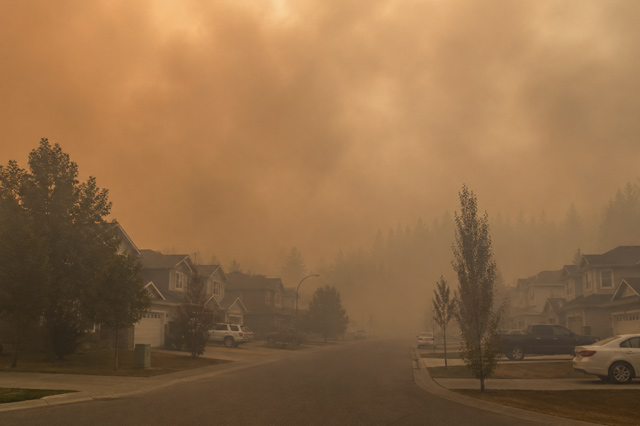
Wildfire smoke can significantly affect air quality across Ontario, including Toronto and the Greater Toronto Area. During periods of poor outdoor air quality, many homeowners keep windows closed, rely more heavily on their HVAC systems, and replace their furnace filters.
Replacing your HVAC filter is the recommended first step after prolonged wildfire smoke, but it doesn’t clean dust or debris that may already have accumulated inside accessible ductwork or HVAC components. If you notice lingering smoke odours, excessive dust around vents, or your air ducts haven’t been professionally cleaned for several years, professional air duct cleaning may also be worth considering.
Understanding how wildfire smoke affects your HVAC system can help you determine whether replacing the filter is enough or if additional maintenance may also be worth considering.
Wildfire Smoke Does Not Always Stay Outdoors
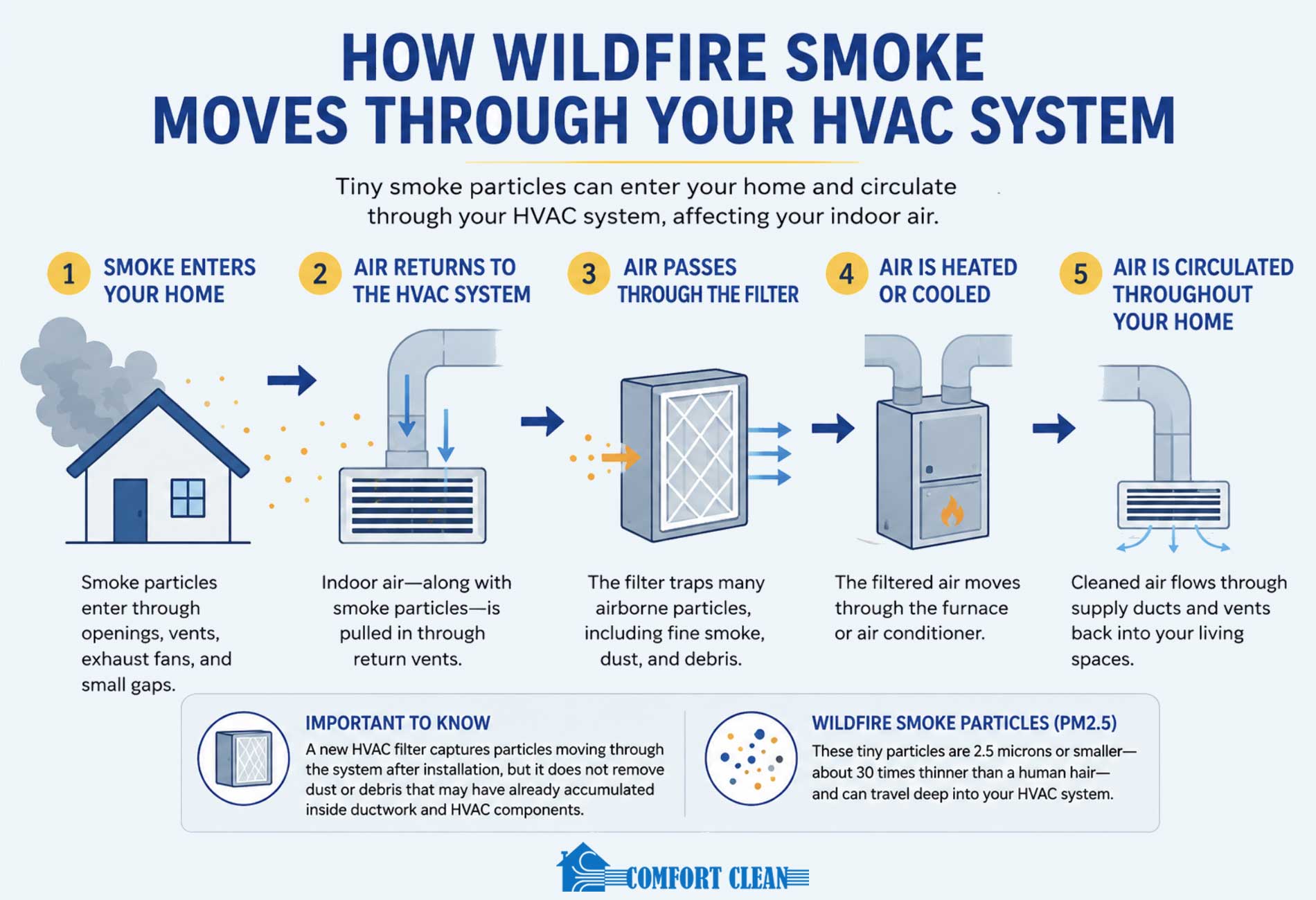
Wildfire smoke contains extremely small airborne particles that can travel hundreds of kilometres. During periods of poor air quality, these particles may enter homes through open doors and windows, fresh air intakes, small gaps in the building envelope, and HVAC ventilation systems.
Many homeowners across Toronto and the GTA rely on their air conditioning systems during wildfire smoke events to keep windows closed and maintain comfortable indoor temperatures. As air continues circulating through the HVAC system, fine smoke particles may also move through the home’s ventilation system.
While some particles remain airborne, others may settle inside ductwork and HVAC components. How much smoke enters a home depends on several factors, including the duration of the smoke event, how often the HVAC system operated, the condition of the air filter, and how well the home was sealed.
Health Canada advises that wildfire smoke can enter buildings through windows, doors, ventilation systems, and other openings. During smoke events, homeowners should also monitor the Air Quality Health Index (AQHI) to better understand outdoor air quality conditions and recommended health precautions. Even after outdoor air quality improves, indoor air may still contain particles that entered during the smoke event, making proper HVAC maintenance an important part of restoring indoor air quality.
This doesn’t mean every home needs professional cleaning after wildfire smoke. However, if your home experienced several days of poor outdoor air quality, it’s reasonable to consider whether smoke-related dust and debris may have accumulated inside your ventilation system.
What Your HVAC Filter Actually Does
One of the biggest misconceptions after wildfire smoke events is that an HVAC filter can capture every particle that enters a home’s ventilation system.
In reality, your furnace filter has one primary job: it captures airborne particles as air passes through it while the HVAC system is operating.
As air flows through the return ducts, the filter helps trap dust, pollen, pet dander, and a portion of fine smoke particles before the air moves through the heating or cooling equipment and is recirculated throughout your home.
A clean, properly rated filter helps:
- ✓protect HVAC equipment from dust buildup;
- ✓improve everyday indoor air quality;
- ✓capture airborne particles circulating through the system;
- ✓maintain proper airflow.
During and after wildfire smoke events, filters may become loaded much faster than usual. For that reason, replacing a dirty filter is one of the first maintenance steps recommended after prolonged exposure to wildfire smoke. The U.S. EPA also recommends checking that the HVAC filter is in good condition, fits properly, and is replaced according to the manufacturer’s recommendations.
Why Replacing the Filter May Not Be the Whole Solution
Replacing your HVAC filter is one of the simplest and most effective maintenance tasks homeowners can perform. It improves airflow, helps protect heating and cooling equipment, and continues capturing airborne particles as your HVAC system operates. However, it does not remove dust or contaminants that have already settled elsewhere within the ventilation system.
Think of it this way: replacing the filter is like installing a new vacuum cleaner bag. The new bag collects future dust, but it doesn’t clean floors that were already dirty. The same principle applies to your HVAC system. If smoke particles, household dust, pet hair, or other debris have already accumulated inside ductwork or other HVAC components, installing a fresh filter won’t remove those existing deposits—it simply starts capturing new particles moving through the system.
This distinction becomes particularly important following extended periods of wildfire smoke, when HVAC systems may have operated continuously for days while outdoor air quality remained poor.
What Replacing the Filter Does — and Doesn’t Do
| A New HVAC Filter… | A New HVAC Filter Doesn’t… |
|---|---|
| ✓ Capture airborne particles moving through the system | ✕ Remove dust already inside ductwork |
| ✓ Help protect HVAC equipment | ✕ Clean supply or return ducts |
| ✓ Improve ongoing filtration | ✕ Remove debris from vents and registers |
| ✓ Support routine HVAC maintenance | ✕ Replace professional duct cleaning when buildup exists |
Professional HVAC cleaning serves a different purpose. Rather than filtering moving air, it removes accumulated dust and debris from accessible sections of the ventilation system using specialized equipment.
This doesn’t mean every home needs duct cleaning after every smoke advisory. However, if your system hasn’t been professionally cleaned for several years or you notice lingering smoke odours, excessive dust around vents, or other signs of buildup, replacing the filter alone may not fully address the condition of your HVAC system.
Filter Replacement vs. Professional Cleaning
Although these services are often mentioned together, they solve different problems. Replacing the filter helps capture airborne particles as air moves through the HVAC system, while professional cleaning addresses dust and debris that may already have accumulated inside accessible ductwork and components.
| HVAC Filter Replacement | Professional Air Duct Cleaning |
|---|---|
| Replaces the used HVAC filter with a clean one | Removes accumulated dust and debris from accessible ductwork and HVAC components |
| Captures airborne particles moving through the system | Addresses buildup that may already be inside the ventilation system |
| Helps protect HVAC equipment and maintain airflow | Helps restore the cleanliness of accessible system components |
| Recommended as routine HVAC maintenance | Considered when excessive dust, debris or other contamination has accumulated |
| Typically completed by the homeowner | Performed using specialized professional equipment |
For most homeowners, replacing the HVAC filter is the recommended first step following prolonged wildfire smoke. However, lingering smoky odours, visible dust around supply registers, particles released when the system starts or a new filter becoming dirty unusually quickly may be reasons to evaluate the overall condition of the ventilation system.
These signs do not automatically mean that the ducts require cleaning. For a more detailed explanation, read our guide: 7 Signs You Need Air Duct Cleaning.
The U.S. EPA notes that excessive amounts of dust and debris inside ductwork, particularly when particles are released into the home from supply registers, are examples of situations where professional cleaning may be worth considering. Wildfire smoke alone does not automatically mean your ducts need cleaning.
However, wildfire smoke can still affect the overall quality of the air inside your home. Learn more about the connection between HVAC maintenance and indoor air quality and health.
A complete duct cleaning service should address more than the visible supply registers. It typically uses negative-pressure vacuum equipment and agitation tools to remove accumulated material from accessible supply and return ducts, main trunk lines, registers and other HVAC components included in the service. NADCA explains that proper source-removal cleaning combines mechanical agitation with vacuum collection to loosen and capture contaminants.
Before hiring a contractor, ask which parts of the system are included, what equipment will be used and whether the service follows recognized industry cleaning practices. More information about the process and service coverage is available on our air duct cleaning service page.
Frequently Asked Questions
Is replacing my HVAC filter enough after wildfire smoke?
Replacing your HVAC filter is the recommended first step after prolonged wildfire smoke. However, a new filter only captures airborne particles moving through the system after installation. It does not remove dust or debris that may have already accumulated inside accessible ductwork or HVAC components.
Should I consider duct cleaning after wildfire smoke?
Not every home requires professional HVAC cleaning after a wildfire smoke event. However, if you notice lingering smoke odours, excessive dust around vents, or your air ducts haven’t been professionally cleaned for several years, it may be worth having your system professionally evaluated.
Can wildfire smoke affect my HVAC system?
Yes. During prolonged smoke events, HVAC systems often operate for extended periods while drawing in outdoor air. Smoke particles can cause HVAC filters to become dirty more quickly and may contribute to additional dust and debris accumulating within accessible parts of the ventilation system.
What does professional HVAC cleaning remove?
Professional cleaning removes accumulated dust, debris, and other contaminants from accessible ductwork and HVAC components using specialized equipment. It complements routine HVAC maintenance, including regular filter replacement.