
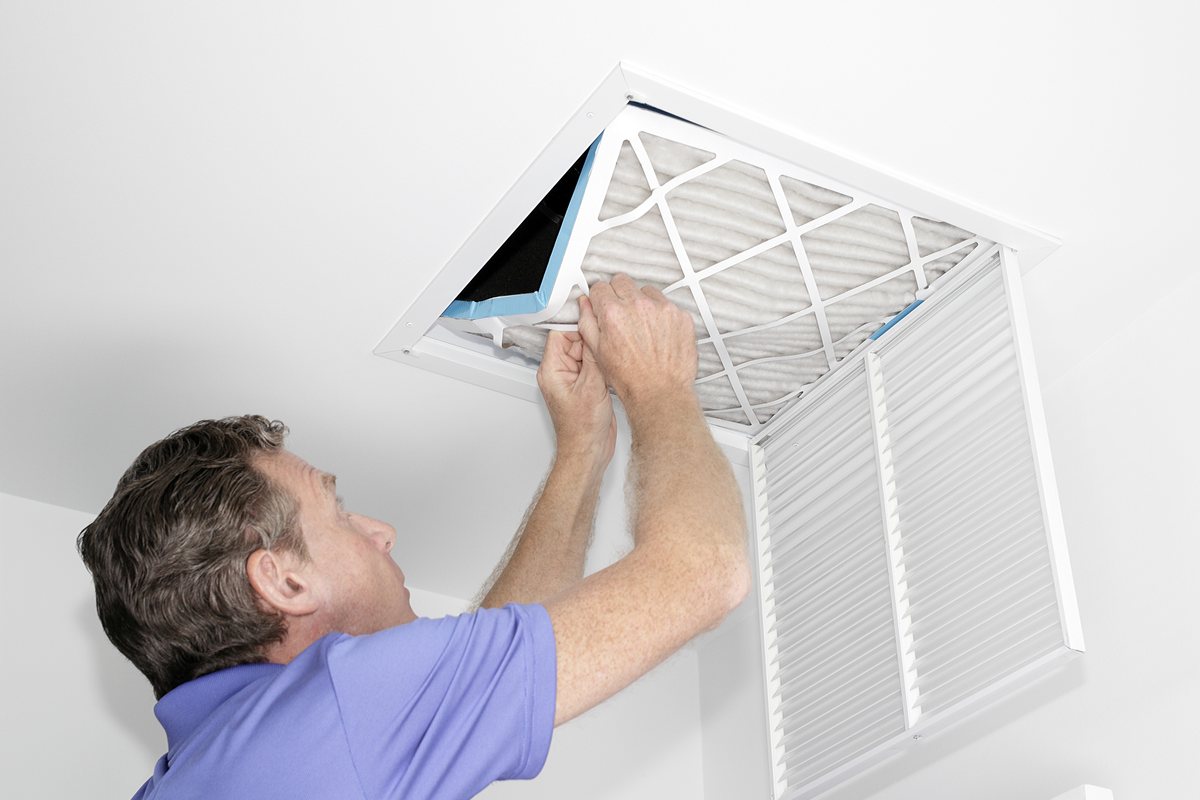
How often to change your furnace filter comes down to the filter and the house: check it monthly during the heating season, replace a standard 1-inch filter every 1 to 3 months, and change a thick 4 or 5-inch media filter on the schedule printed on it. Pets, allergies, renovation dust and wildfire smoke all shorten that schedule.
Below: a schedule by situation, which way the filter goes, MERV 8 vs 11 vs 13, and five steps to change it. We are a family-run duct and furnace cleaning company serving Toronto and the GTA since 1980, so we will also be honest about what a filter cannot do for a system that is already dusty.
How often to change a furnace filter
CMHC’s home maintenance advice is to check and clean or replace furnace air filters monthly during the heating season. In the GTA that season runs roughly from November to March and often starts in October, so plan on five or six checks a winter.
Checking is not the same as replacing. A thin 1-inch pleated filter usually needs replacing every 1 to 3 months. Thick 4 or 5-inch media filters hold far more dust and commonly last 6 to 12 months; go by the interval on the filter or in your furnace manual. With central air, the same filter keeps working all summer.
Where you land in that range depends on how much the blower runs (a thermostat fan set to “On” instead of “Auto” runs it around the clock), what is in the air, and how fine the filter is.
Furnace filter replacement: how often by situation
Use it as a starting point, then adjust to what your own filter looks like at each check.
| Your situation | Check | Replace |
|---|---|---|
| 1-inch filter, no pets, fan on “Auto” | Monthly in the heating season | Every 2 to 3 months |
| Pets, allergies or asthma in the home | Monthly | Every 1 to 2 months, often monthly in winter |
| Thermostat fan set to “On” all the time | Monthly | Every 1 to 2 months |
| Renovation, drywall sanding or flooring work | Weekly during the work | As soon as it looks grey, and again when the work is done |
| Wildfire smoke or poor outdoor air days | After each smoky stretch | When it looks grey or discoloured |
| New build or just moved in | After the first few weeks | As soon as it looks dirty; construction dust loads filters fast |
| Condo or townhouse, filter behind a return grille | Monthly | Every 1 to 3 months |
| Thick 4 or 5-inch media filter | Every 2 to 3 months | On the manufacturer’s interval, commonly 6 to 12 months |
During renovations, also turn the system off while anyone is sanding and cover the return grilles; our guide to duct cleaning after a renovation explains why. For smoke, see our post on wildfire smoke and your HVAC filter.
Which way does the furnace filter go?
The arrow on the filter frame shows the direction of airflow. Air travels from your rooms through the return ducts, through the filter, then into the blower. So the arrow points toward the furnace and away from the return duct.
An easy way to remember furnace filter direction: dusty air goes in the back of the filter, and clean air comes out where the arrow points, straight into the blower.
Basement furnace with a filter slot
In a typical GTA basement, the furnace stands upright with the large return duct coming down beside it. The filter slides into a slot where that duct meets the cabinet, or sits in a rack inside the lower blower door. Either way, the arrow points into the furnace.
Filter behind a wall or ceiling grille
Many condos and townhouses keep the filter behind a hinged return grille in a hallway wall or ceiling. Here the arrow points into the wall or ceiling, away from the room.
No arrow on the filter
On a pleated filter, the wire mesh or support backing faces the furnace, because it keeps the media from being sucked toward the blower. Installed backwards, the unsupported media can bow and pull away from its frame, letting dust slip around the edges. Once you have it right, draw an arrow and write the filter size on the duct with a marker.
Furnace filter MERV ratings: MERV 8 vs 11 vs 13
MERV stands for Minimum Efficiency Reporting Value. It rates how well a filter captures particles of different sizes; on home furnace filters you will mostly see numbers from 1 to 16, and higher numbers catch smaller particles. Some retailers print their own scale, so look for the MERV equivalent to compare like with like.
| Filter | What it catches | Good fit for | Keep in mind |
|---|---|---|---|
| Basic fibreglass (low MERV, about 1 to 4) | Large dust, lint and hair | Basic protection for the furnace itself | Lets most fine dust through to the blower, ducts and rooms |
| MERV 8 | Household dust, lint, pollen, larger mold spores | Most homes without pets or allergies | A good everyday balance of capture and airflow |
| MERV 11 | Finer dust and pet dander on top of the MERV 8 list | Homes with pets, allergies or a lot of dust | Slightly more airflow resistance; may need changing a bit sooner |
| MERV 13 | More of the very fine particles, such as those in smoke | Allergies, asthma, wildfire smoke season | Most restrictive in a 1-inch size; check that your furnace can handle it |
The airflow trade-off
A denser filter also makes the blower work harder. Many furnaces handle a MERV 11 without trouble, but a 1-inch MERV 13 can restrict airflow in a system that was not designed for it, which means weaker heat at the registers, longer run times and more strain on the blower motor. Check your furnace manual before you upgrade.
For MERV 13-level filtration, a 4 or 5-inch media cabinet is usually the better route, because the extra surface area keeps resistance down. A licensed HVAC contractor installs those; we do not. Rooms heating slower after an upgrade, a whistle at the filter slot or a filter bowing toward the blower all mean step back down to MERV 8 or 11.
How to change a furnace filter in 5 steps
It takes a few minutes and usually no tools. Buy the exact size printed on the old filter, for example 16x25x1. Sizes are nominal, so the real filter measures a little smaller; go by the printed size, not your tape measure.
- Turn the furnace off at the thermostat. When the filter sits behind the blower door, also switch off the furnace service switch.
- Find the filter and note the arrow. Pull off the slot cover or open the grille, and check the arrow and the size on the old filter.
- Slide the old filter out slowly, keeping it level so dust does not drop into the slot, and put it straight into a bag.
- Vacuum the slot with a brush or crevice attachment.
- Insert the new filter with the arrow toward the furnace. Check it sits flat with no gaps, close the cover or door fully, turn the furnace back on and write the date on the frame.
On many furnaces the blower door presses a safety switch, so the furnace will not start until the door is seated properly. That is normal, not a breakdown.
How often is too long? Signs your furnace filter is overdue
A clogged filter does not stop the furnace, which is exactly why it gets forgotten. The trouble builds quietly:
- Less airflow. Rooms at the far end of the house get weaker heat, and the furnace runs longer.
- Overheating. With too little air across the heat exchanger, the furnace can trip its safety limit and cycle off and on.
- Dust bypass. A loaded filter can bow or pull away from its frame, and air carries dust around the edges into the blower, the AC coil and the ducts.
Dust that gets past the filter coats the blower wheel and the ducts, and some lands on the heat exchanger, where it adds to the dusty smell many homes notice when the heat first comes on. Change the filter now when it is evenly grey and you cannot see light through it, dust is building up around the registers, or the filter has bent out of shape.
What a filter can’t fix: when furnace and duct cleaning makes sense
A filter protects the furnace from today forward. It does nothing about dust already packed into the blower wheel, the return drop and the ducts. For most homes with a steady filter routine, the filter is all you need between occasional cleanings. Cleaning makes sense when dust has already gotten past it:
- The filter was missing, the wrong size or left in for a season or more.
- With the filter out, a flashlight through the slot shows grey dust caked inside the duct or on the blower.
- Dust puffs out of the supply registers when the fan starts.
- You just finished a renovation or moved into a newly built house.
The U.S. EPA page on whether you should have your air ducts cleaned lists ducts clogged with excessive dust and debris, or particles released into the home from supply registers, as reasons to consider it, and CMHC mentions moving into a newly built house. The EPA also says duct cleaning has not been shown to prevent health problems, so be wary of anyone selling it as a cure; our page on how to avoid duct cleaning scams lists other red flags.
When you do need it, our air duct cleaning uses truck-mounted, high-suction negative-pressure equipment plus brushing, and furnace cleaning can be added to the same visit. Every package includes before-and-after photos, and the Luxury package ($499) adds the furnace blower compartment clean and sanitizing of the ductwork.
What we see on the job
We pull a lot of filters out of GTA furnaces before we start cleaning, and the same mistakes keep coming up:
- Filters in backwards, the media bowed toward the blower.
- A filter an inch short for its slot, leaving a gap that dust pours straight through.
- Missing slot covers, so the furnace pulls unfiltered basement air in around the filter.
- An install date from years ago written on a filter that is grey right through.
None of this is expensive to fix. A correctly sized filter, facing the right way and checked monthly, does most of the work.
When to call a professional
You do not need anyone to change a furnace filter. Call a licensed HVAC technician when the furnace keeps shutting off and restarting, airflow stays weak with a clean filter, or you want a media cabinet installed. Call a duct and furnace cleaning company when dust is already in the blower and ducts; our list of signs you need air duct cleaning can help you decide.
We clean; we do not repair furnaces, do gas work or install equipment. When our technicians spot something that looks wrong, they point it out and photograph it so you can pass it on to a licensed HVAC technician.
We clean the blower compartment and the ducts with truck-mounted negative-pressure equipment and show you before-and-after photos. See our furnace cleaning service or call 905-738-1878 for a confirmed price.
Frequently Asked Questions
Can I take my furnace filter out for a day?
Try not to run the furnace without one. With no filter, everything the return pulls in, from fine dust to pet hair, lands on the blower wheel and heat exchanger and goes into the ducts. Until the new filter arrives, put the old one back or keep the system off.
How do I find my furnace filter?
In many GTA basements it sits in a narrow slot where the large return duct meets the furnace, behind a thin pull-off cover. Other common spots are inside the lower blower door, in a filter cabinet beside the furnace, or behind a wall or ceiling return grille, which is typical in condos and townhouses.
How often should I change a MERV 11 filter?
A 1-inch MERV 11 filter usually needs replacing every 1 to 3 months, so check it monthly in the heating season. It traps finer dust than a MERV 8 and can load up a little faster with pets or a fan that runs constantly. Thick 4 or 5-inch MERV 11 media filters last much longer.
Do you need to change the AC filter in winter?
Yes. With central air, the furnace and air conditioner share one blower and one filter, so the AC filter and the furnace filter are the same part. It works every time the blower runs, heating or cooling. Check it monthly through the heating season and replace it when it looks grey.
Are furnace filters recyclable?
Most disposable furnace filters do not belong in the blue bin, because they mix cardboard or plastic frames, fibreglass or synthetic media and wire, and they are full of dust. Bag the used filter so the dust stays put and put it in the garbage, unless your municipality’s waste guide says otherwise.