Air exchanger and HRV cleaning for houses and condo suites across Toronto and the GTA
Filters, core, fans and HRV ducts, added to your duct cleaning visit
Ontario Wildfire Smoke
May Still Be Inside Your Home





Air exchanger cleaning means cleaning the whole HRV or ERV, not just rinsing the filters: the filters, the heat recovery core, the fans, the drain pan, the ducts that run to the outside and the intake and exhaust hoods on your wall. Comfort Clean has cleaned air systems across Toronto and the GTA since 1980, and HRV cleaning is one of the services you can add to a duct cleaning visit.
We are family run, a CNADCA member, and work from our office at Bathurst and Finch in North York. HRV cleaning is priced by quote once we know the unit and how it is ducted, and we confirm the total by phone before we book.
An air exchanger swaps stale indoor air for fresh outdoor air, all day, without throwing away most of your heat. An HRV (heat recovery ventilator) pushes the outgoing air and the incoming air through a core of thin plates. The two streams never mix, but the warm outgoing air heats the cold incoming air on the way past.
An ERV (energy recovery ventilator) works the same way and also passes some moisture across the core. People call both of them air exchangers, and the cleaning is much the same.
Newer houses in the GTA are built tight to save energy. That is good for heating bills, but a tight house holds on to cooking smells, moisture from showers and the stale air of a closed-up winter. Many newer homes and townhouses came with an HRV for exactly that reason, usually a white or grey box in the basement near the furnace with four ducts coming off it.
Two of those ducts run to the outside wall: one brings fresh air in, the other sends stale air out. The other two run into the house. In some homes the HRV has its own ducts to the bathrooms, kitchen and bedrooms. In many others it is tied into the furnace return, so the furnace blower spreads the fresh air through the house.
An air exchanger moves air every hour of the year, so it collects dirt faster than people expect. Many of the units we open have never been cleaned past the filters, and some not even that. These are the parts that build up:
The exhaust side often picks up the most. Bathroom air is damp and full of lint, and over the years that dust sticks to the inside of the runs.
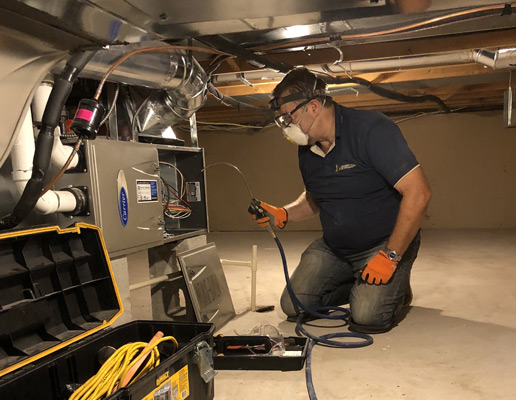
Our technicians clean the air exchanger and the ductwork connected to it, using the same truck-mounted negative-pressure vacuum and brushing we use on furnace ducts. On a typical visit we:
Cores differ. Many HRV cores can be washed in lukewarm water with mild soap, while most ERV cores must never get wet and can only be vacuumed. We check the core type before we touch it, and when we are not sure, we vacuum only.
We do not repair or replace HRV motors, control boards, wiring or defrost controls, and we do not balance airflow or rework ducts. When we see a failed fan, a cracked core or a duct that has come loose, we photograph it so a licensed HVAC technician can take it from there.
Plenty of HRVs keep humming along long after they stop doing much. These are the signs we hear about most:
Some of these are not dirt. A unit that runs but moves no air may have a failed fan motor, and a control panel showing an error needs a technician. We will tell you which is which once the unit is open.
Ontario winters are hard on an air exchanger. When the outdoor air is very cold, moisture in the outgoing warm air can freeze on the core. HRVs handle this with a defrost cycle: every so often the unit stops bringing in outdoor air and lets warm air thaw the core, and the meltwater runs out through the drain.
A dirty core and clogged filters make frost worse, because the air moves slower and the narrow channels ice over faster. A drain line that is kinked, frozen or run through a cold space keeps the water in the pan, where it can overflow inside the cabinet.
A few winter habits keep it working:
Summer is the opposite problem. In a humid Toronto July an HRV brings in muggy outdoor air, so many households run it on a lower setting while the AC is on. Your unit’s manual will say what it recommends for summer.
Most of the upkeep on an air exchanger is yours, and it is simple. Most HRV manuals call for checking the filters every couple of months and cleaning the core once or twice a year. Follow the manual for your model, since the details differ.
To clean the filters:
For the core, check the manual first. Many HRV cores slide out and can be soaked and rinsed gently, while ERV cores generally cannot get wet. Never use a pressure washer, a dishwasher or harsh cleaners on a core, and put it back the way it came out, since most only fit one way.
Outside, keep both hoods clear of leaves, snow and fluff, and keep plants, garbage bins and barbecues away from the fresh-air intake.
What you cannot reach yourself is the ductwork, the inside of the fan housings and the runs to the outside wall. That is where a professional cleaning earns its place every few years, ideally on the same visit as your ducts.
Many newer condo suites in Toronto and the GTA have their own ERV or HRV, usually a compact unit in the laundry closet, a utility closet or above a bulkhead ceiling near the fan coil. It brings fresh air into the suite and sends stale air outside through short ducts.
Suite units are small, and their filters clog fast, especially in towers near busy roads or construction. They also get forgotten, because they hide behind a door no one opens, and the filters are often the only part that has ever been touched.
We clean in-suite air exchangers along with the fan coil, the short supply runs and the dryer vent, and we book access through your concierge or property manager. Corridor and common-area ventilation is a building-wide job arranged through management. The details of suite work are on our condo duct cleaning page.
The best time to clean an air exchanger is the same visit as your ducts. Many HRVs connect to the furnace return, so a dirty HRV keeps feeding dust into freshly cleaned ductwork, and a dirty duct system loads up a freshly cleaned HRV. Doing both together means one appointment and one setup of the vacuum truck.
HRV cleaning is an additional service, priced by quote. It is not part of any of our air duct cleaning packages, and the price depends on the unit, how many ducts it has and how easy the runs and outside hoods are to reach. When you call, tell us the brand and model from the label if you can see it, whether it ties into the furnace or has its own ducts, and roughly how long it has been since the last cleaning.
Our posted packages for the air duct cleaning itself are:
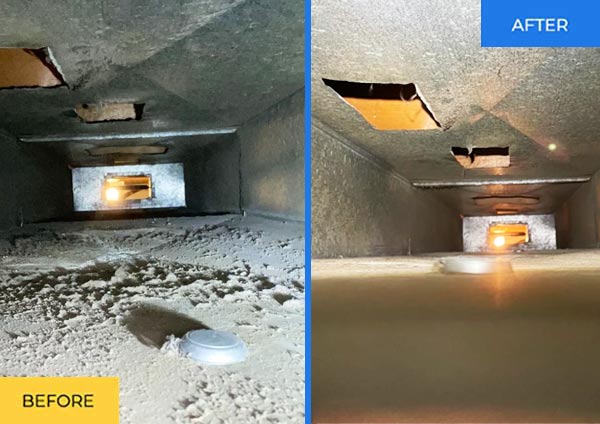
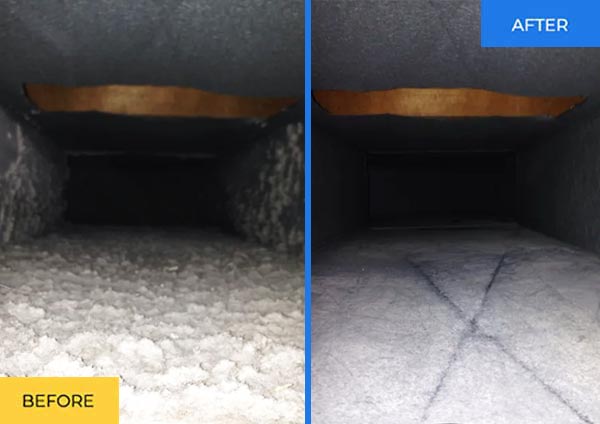
Every package includes before-and-after photos, extra vents are $12 each, and there is no trip fee inside our service area. The full breakdown is on our duct cleaning prices page.
Our office at 4949 Bathurst St is close to homes across North York, Thornhill and Vaughan, and we cover the rest of Toronto and the GTA too. Call 905-738-1878 for a quote on your air exchanger.

With more than 45 years across Toronto and the GTA, our trained technicians have cleaned everything from older homes to new builds and commercial units. We know the work and treat every property with care.
We don’t use weak portable vacuums. Our high-suction, truck-mounted compression systems pull debris out of your home and into our truck, ensuring a mess-free, deep clean.
Clogged ducts make your HVAC system work harder, and the dust they circulate can bother people with asthma or allergies. A thorough cleaning restores proper airflow.
No hidden fees and no bait and switch. You will know the exact rate for your home or business across the GTA before we start, with the price posted up front.
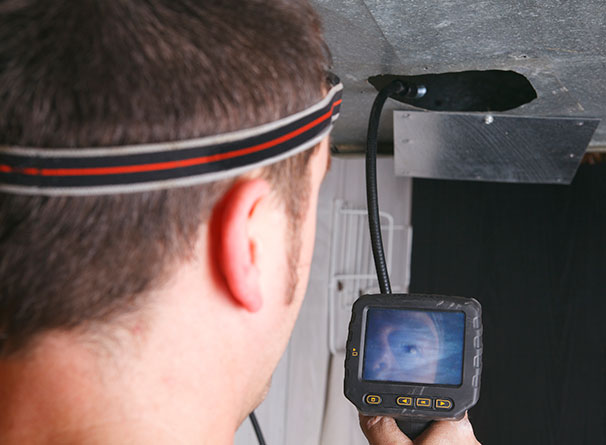
Our reputation across the GTA is built on word of mouth. We treat your property with respect, use drop cloths and protective gear, and back every job with before-and-after photos.
Unnecessary services are never pushed. If your system is in good condition, we’ll tell you.
| Services | “Basic Package” $329 for up to 10 vents | “Comfort Package” $399 for up to 10 vents | “Luxury Package” $499 for up to 15 vents |
|---|---|---|---|
| $12.00 per each extra vent cleaned after the initial | |||
| “Basic Package” $329 for up to 10 vents | |||
|---|---|---|---|
| $12.00 per each extra vent cleaned after the initial | |||
| “Comfort Package” $399 for up to 10 vents |
|---|
| “Luxury Package” $499 for up to 15 vents |
|---|


We clean HRVs and ERVs in detached homes, semis, townhomes and condo suites across Toronto and the GTA, working from our office at Bathurst and Finch in North York. Add it to a duct cleaning visit and the air exchanger and the ducts it feeds are cleaned together.
Check and clean the filters every couple of months, and clean the core once or twice a year, following your manual. A professional cleaning of the whole unit, its fans, drain pan and ducts makes sense every few years, and it is easiest on the same visit as your duct cleaning. Homes with pets, renovations or a busy road nearby may need it sooner.
Turn the HRV off, open the door and slide the filters out. Vacuum off the loose dust, wash washable filters in warm water with mild dish soap, rinse, and let them dry completely before reinstalling. Replace disposable pleated filters with the same size and type. Wipe out the cabinet while it is open, and check that the drain line is not kinked.
Check the manual first, because cores differ. Many HRV cores can be soaked in lukewarm water with mild soap, rinsed gently and left to dry before going back in. Most ERV cores must never get wet and should only be vacuumed. Never use a pressure washer, a dishwasher or harsh cleaners, and reinstall the core the way it came out, since most only fit one way.
Yes. The ducts that connect an air exchanger to the outside and to the house collect dust, lint and moisture, especially on the exhaust side that pulls air from bathrooms. We clean the reachable HRV runs with the same truck-mounted negative-pressure vacuum and brushing we use on furnace ducts, and clear the intake and exhaust hoods on the outside wall where they can be reached safely.
No. Winter is when an HRV does its most useful work, clearing the moisture that makes windows stream with condensation and the stale air of a closed-up house. Leave it running and let the defrost cycle deal with the cold. Keep the outside hoods clear of snow, check that the drain line is flowing, and keep the filters clean so the unit is not straining.
Some frost on the core in very cold weather is normal, and the defrost cycle clears it. Heavy or repeated icing usually points to clogged filters or a dirty core slowing the air, a blocked outside hood, or a drain line that is kinked or frozen. Cleaning deals with the first three. A defrost control or fan that has failed needs a licensed HVAC technician.
Yes. Many newer condo suites have a compact in-suite ERV or HRV in a closet or above the ceiling near the fan coil. We clean its filters, core, fans and short duct runs along with the fan coil and dryer vent, and book access through the concierge or property manager. Corridor and common-area ventilation is a building-wide job arranged through management.
No. Air exchanger cleaning is an additional service, priced by quote, that can be added to any duct cleaning visit. Our packages cover the ductwork: Basic $329 and Comfort $399 for up to 10 vents, and Luxury $499 for up to 15 vents. Extra vents are $12 each, every package includes before-and-after photos, and we confirm the total by phone before booking.
See recent Google reviews from customers who chose Comfort Clean across Toronto and the GTA.