
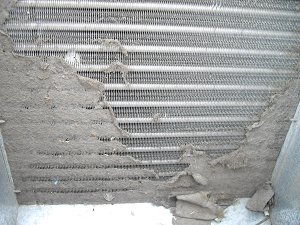
Why a Dirty Evaporator Coil Can Prevent Your AC from Cooling Properly
During the summer months, many homeowners notice that their air conditioning system is running constantly but still struggles to cool the house. In most cases, the issue isn’t the thermostat or the AC unit itself — it’s a dirty evaporator coil combined with restricted airflow.
This problem affects not only older systems. Even relatively new air conditioners can lose efficiency if dust and debris are allowed to circulate inside the HVAC system.
What Is an Evaporator Coil and Why It Gets Dirty
The evaporator coil is located inside the indoor unit of your air conditioning system. Its function is to absorb heat from the air before it is circulated back into your home.
When air filters are low quality, changed too infrequently, or when air ducts contain construction debris and dust, contaminants accumulate on the coil surface. Over time, this buildup reduces heat transfer and significantly impacts cooling performance.
How Poor Airflow Impacts AC Efficiency
Restricted airflow is one of the most common reasons an AC system fails to cool properly. Dust inside air ducts continuously feeds debris into the system, eventually clogging critical components.
Without proper airflow:
-
The evaporator coil cannot absorb heat efficiently
-
The system works longer cycles
-
Energy consumption increases
-
Ice may form on the coil in severe cases
Regular HVAC maintenance and professional duct cleaning services help prevent these issues by keeping airflow pathways clean and unobstructed.
Common Signs Your Evaporator Coil Needs Attention
-
AC is running but rooms remain warm
-
Weak airflow from vents
-
Ice forming on the indoor unit
-
Persistent dusty or musty odors
-
Rising electricity bills
Ignoring these signs often leads to higher repair costs and reduced system lifespan.
How Often Should HVAC Systems Be Cleaned
While exact intervals vary depending on usage and environment, general guidelines include:
-
Air duct inspection every few years
-
Evaporator coil inspection annually
-
Air filter replacement every 2–3 months (more often for homes with pets)
Buildings after renovations or new construction are especially prone to duct contamination.
Why Professional Equipment Makes a Difference
Effective HVAC cleaning requires industrial-grade, truck-mounted vacuum systems capable of removing heavy debris from deep inside ductwork. Portable or low-powered units often fail to capture fine dust and may even redistribute contaminants.
This is particularly critical for offices, retail spaces, and other facilities that require commercial duct cleaning to maintain consistent air quality and system performance.
Protect Your Comfort and Indoor Air Quality
A neglected evaporator coil can silently reduce your AC efficiency and comfort. Addressing airflow issues early helps prevent costly breakdowns and keeps your HVAC system operating as intended.
Regular inspections, proper filtration, and professional cleaning play a key role in maintaining a healthy indoor environment year-round.