
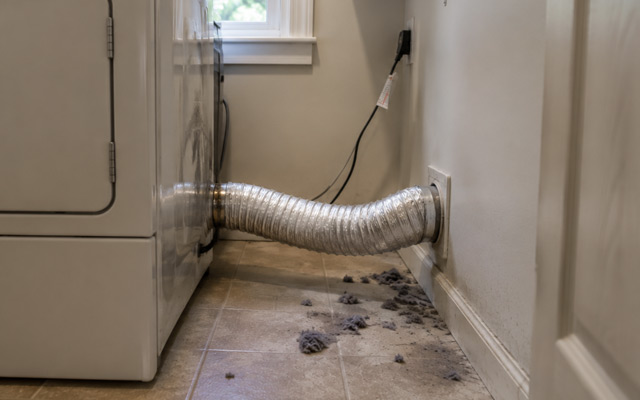
If you don’t clean your dryer vent, lint and debris can slowly build up inside the venting system. Over time, this restricts airflow, causes the dryer to run hotter and longer, increases energy use, and may create a serious fire hazard.
This is one of those home maintenance issues that is easy to ignore because most of the problem is hidden behind the dryer or inside the wall. The dryer may still turn on, heat up, and finish a cycle — but restricted airflow can quietly make the system less safe and less efficient.
Fire safety organizations consistently warn homeowners to keep dryer vents clear. The U.S. Fire Administration advises homeowners to clean the lint filter before and after each load and keep the area around the dryer clear of lint. Toronto Fire Services also recommends regularly removing lint from ducts and exhaust vents. If you are noticing early symptoms, our guide to dryer vent warning signs explains what to watch for before the problem becomes more serious.
Quick Answer: The Main Risks of a Clogged Dryer Vent
| Problem | What Happens | Why It Matters |
|---|---|---|
| Fire risk | Lint collects near heat | Lint is highly flammable |
| Longer drying times | Air cannot move properly | Clothes may need multiple cycles |
| Higher energy bills | Dryer runs longer | More electricity or gas is used |
| Appliance wear | Motor and heating parts work harder | The dryer may break down sooner |
| Moisture buildup | Damp air does not vent outside | Can contribute to odours, mildew, or humidity |
| Gas dryer safety concerns | Exhaust gases may not vent properly | Restricted venting should be addressed quickly |
Why Dryer Vents Get Clogged
Dryer vents collect lint because every drying cycle moves warm, moist air through the duct. The lint screen catches some of it, but it does not catch everything. Small particles can pass into the vent and stick to the interior walls.
This usually happens gradually. A homeowner may not notice anything at first. Then drying times get longer, clothes feel hotter than usual, or the laundry room starts to feel warmer during dryer use.
Common causes include:
- lint buildup inside the duct;
- a crushed or bent dryer hose;
- a long vent run with several turns;
- a blocked exterior vent flap;
- bird nests or debris near the outside vent;
- poor installation or old flexible ducting.
Fire Risk: The Most Serious Dryer Vent Problem
The biggest risk of neglecting dryer vent cleaning is fire. Lint is light, dry, and flammable. When it builds up inside a vent with restricted airflow, heat can accumulate instead of being pushed safely outdoors.
Research from the National Fire Protection Association identifies failure to clean as a leading factor in home clothes dryer and washer fires. Dust, fibre, and lint are also among the leading items first ignited in dryer fires.
A clogged dryer vent does not always create an obvious emergency right away. The danger often builds slowly. The dryer runs a little longer. The machine becomes a little hotter. More lint collects. That is why dryer vent maintenance is both a performance issue and a safety issue.
Longer Drying Times and Higher Energy Use
A dryer depends on airflow. Heat alone does not dry clothes efficiently — the system also needs to remove moist air from the drum and exhaust it outside.
When the vent is clogged, damp air remains trapped longer. As a result, the dryer may need extra time or repeated cycles to dry the same load.
You may notice:
- towels taking much longer to dry;
- clothes still damp after a normal cycle;
- heavier loads needing two cycles;
- the dryer running hotter than before;
- laundry taking longer even when the lint trap is clean.
This extra runtime can increase energy use and place unnecessary strain on the appliance.
Appliance Wear and Possible Breakdowns
A clogged vent forces the dryer to work harder. The motor, heating element, sensors, belts, and other internal components may experience more stress because the appliance has to run longer and hotter than intended.
Over time, this can contribute to:
- overheating;
- reduced dryer efficiency;
- premature part failure;
- more service calls;
- shorter appliance lifespan.
In many cases, homeowners think the dryer itself is failing, when the actual problem is poor airflow through the vent.
Moisture, Odours, and Indoor Air Concerns
Dryer vents are designed to move warm, damp air outside the home. When that airflow is restricted, moisture may stay inside the duct, around the dryer, or in the laundry area.
This can lead to:
- stale or musty odours;
- moisture around the dryer;
- lint sticking inside the duct more easily;
- higher humidity in the laundry room;
- possible mildew conditions in poorly ventilated areas.
This is especially important in homes where the dryer vent is long, hidden behind finished walls, or routed through upper floors.
Moisture and airflow problems are also connected to broader home comfort and indoor air quality concerns, especially in homes where ventilation systems are not maintained regularly.
Special Concern: Gas Dryers
Gas dryers also need proper ventilation because combustion gases must be exhausted safely outdoors. If the dryer vent is blocked or restricted, the system may not vent properly.
A clogged gas dryer vent should not be ignored. If you notice unusual odours, overheating, poor drying performance, or any concern with exhaust ventilation, stop using the dryer and have the system inspected.
Warning Signs Your Dryer Vent Needs Cleaning
You may need dryer vent cleaning if you notice one or more of these signs:
- clothes take longer than usual to dry;
- towels or heavy loads need more than one cycle;
- clothes feel unusually hot after drying;
- the dryer exterior feels very hot;
- there is a burning smell during operation;
- the laundry room becomes unusually warm;
- lint is visible behind the dryer;
- lint collects around the exterior vent;
- the outside vent flap does not open properly;
- moisture or musty odours appear near the dryer.
A burning smell should always be treated seriously. Stop using the dryer until the issue is checked.
For a more detailed checklist, read our related guide: Dryer Vent Warning Signs: When to Book Dryer Vent Cleaning.
Why Cleaning the Lint Trap Is Not Enough
Cleaning the lint trap after every load is important, but it is not the same as cleaning the dryer vent.
The lint trap only captures part of the lint. Over time, fine particles can still pass into the duct and collect inside the vent system. This is especially common in longer vent runs, ducts with bends, or systems where the exterior vent is partially blocked.
So the lint trap is daily maintenance. Dryer vent cleaning is deeper system maintenance.
The same principle applies to ductwork in forced air homes: surface cleaning and filter changes help, but deeper buildup inside the air pathway may still need attention. You can learn more in our guide on what happens if you don’t clean your air ducts.
DIY Dryer Vent Cleaning vs. Professional Cleaning
Some simple maintenance can be done by homeowners, such as cleaning the lint screen, checking behind the dryer, and making sure the exterior vent is not blocked.
However, DIY cleaning may not fully solve the problem if the vent is long, hidden, clogged deep inside, or difficult to access.
| Situation | DIY May Help | Professional Cleaning Is Better |
|---|---|---|
| Cleaning the lint screen | Yes | No |
| Removing visible lint behind dryer | Yes | Sometimes |
| Short, straight vent path | Sometimes | Yes, if buildup remains |
| Long duct with turns | Limited | Yes |
| Exterior vent blocked | Sometimes | Yes, if hard to access |
| Burning smell or overheating | No | Yes |
| Dryer still slow after basic cleaning | No | Yes |
Professional dryer vent cleaning is designed to clear the full vent path and restore proper airflow, not just remove lint from the visible areas.
How Often Should Dryer Vents Be Cleaned?
For many homes, dryer vent cleaning is recommended about once a year. Some homes may need it more often, especially if:
- the dryer is used frequently;
- the household has many people;
- there are pets;
- towels, bedding, or heavy fabrics are dried often;
- the vent run is long;
- the dryer is located far from an exterior wall;
- drying times are increasing.
The lint screen should still be cleaned after every load.
When to Call ComfortClean
You should consider professional dryer vent cleaning if your dryer is taking longer to dry, overheating, producing a burning smell, or showing signs of restricted airflow.
ComfortClean provides residential cleaning services for homeowners in Toronto and the GTA, including dryer vent and duct cleaning services that help improve airflow, reduce lint and dust buildup, support safer system operation, and help your home’s air pathways stay better maintained.
If your concerns go beyond the dryer and include dusty vents, stale odours, weak airflow, or buildup in the HVAC duct system, you may also want to review our guide on what happens if air ducts are not cleaned.
Related ComfortClean Resources
If you are researching dryer vent safety, duct cleaning, or indoor air quality, these related ComfortClean guides may also be helpful:
- Dryer Vent Warning Signs: When to Book Dryer Vent Cleaning
- What Happens If You Don’t Clean Your Air Ducts?
- Pros and Cons of Forced Air Heating and Cooling Systems
- Air Quality and Health
- Is Air Duct Sanitizing Really Necessary?
- How to Avoid Duct Cleaning Scams
Frequently Asked Questions About Dryer Vent Cleaning
Can a clogged dryer vent cause a fire?
Yes. A clogged dryer vent can increase fire risk because lint is flammable and restricted airflow can cause heat to build up inside the dryer and vent system. Fire safety organizations identify failure to clean as a major factor in dryer-related home fires.
Why are my clothes taking longer to dry?
Longer drying times often mean the dryer is not venting properly. If moist air cannot escape through the vent, clothes stay damp longer and may need repeated cycles.
Is cleaning the lint trap enough?
No. Cleaning the lint trap is important and should be done after every load, but lint can still collect deeper inside the dryer vent duct. The vent itself also needs periodic cleaning.
How do I know if my dryer vent is blocked?
Common signs include longer drying times, hot clothes, a hot dryer exterior, lint behind the dryer, a burning smell, or an exterior vent flap that does not open properly.
How often should I clean my dryer vent?
Many homes benefit from dryer vent cleaning about once a year. Homes with heavy dryer use, pets, long vent runs, or repeated drying problems may need cleaning more often.
Should I stop using the dryer if I smell burning?
Yes. A burning smell during dryer operation should be treated as a serious warning sign. Stop using the dryer and have the dryer and vent system checked before running it again.